Updated
A BMW retrofit is any hardware or software added after the car left the factory, from a tow bar to a coded feature. Retrofits with original parts, done by a competent workshop, are usually fine. Risky ones involve cheap electronics, unofficial coding or looks that imitate a higher trim. Compare the car with its factory option list to spot them.
2
min read
By the
What counts as a retrofit on a BMW?
Anything that was not on the car when it left the factory. Typical examples are a tow bar, a reversing camera, Apple CarPlay activated by coding, LED lighting, an M Sport style body kit or performance software.
Which retrofits are normal and which are risky?
Usually fine | Worth questioning |
|---|---|
Original tow bar fitted by a workshop | Engine or gearbox remap |
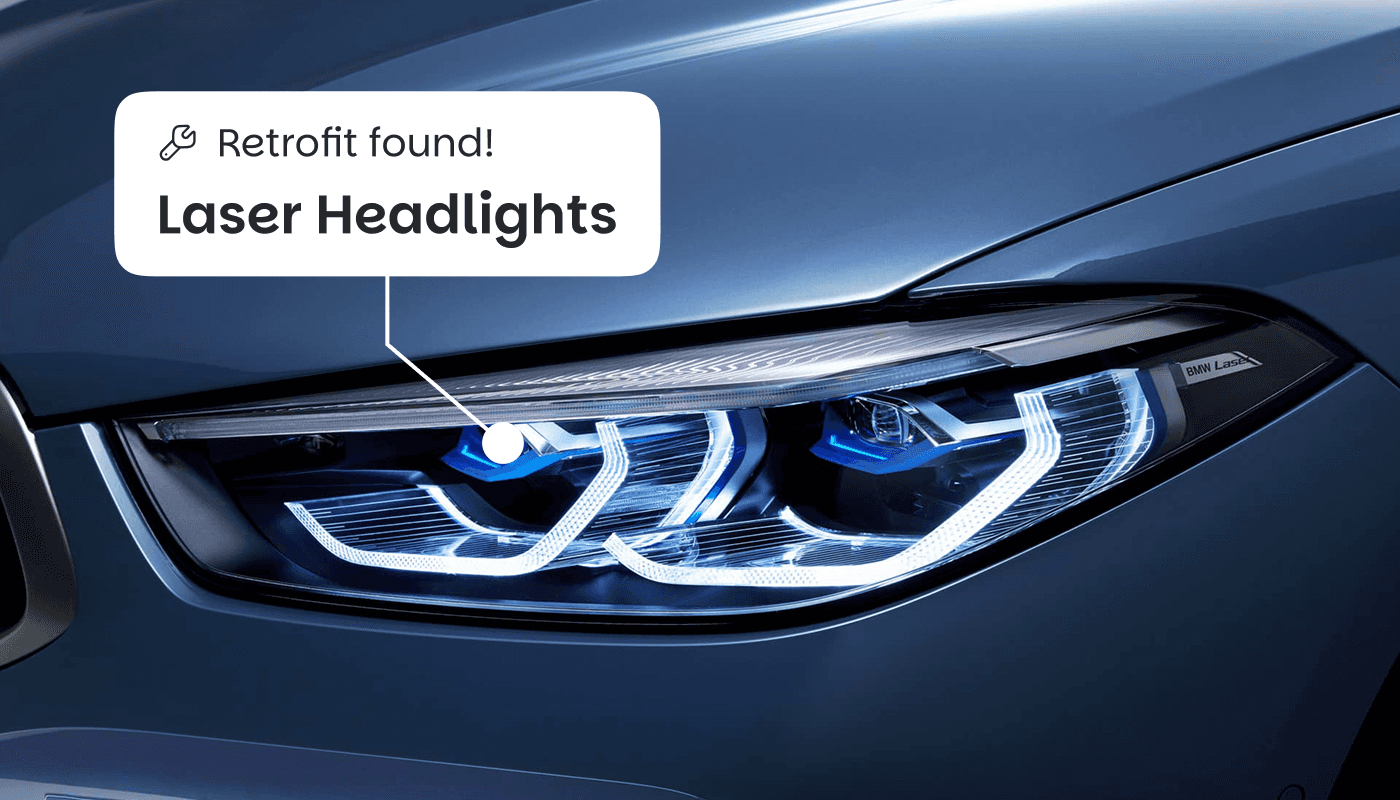
Features activated by coding | Aftermarket headlight units |
Original camera or parking sensors | Particulate filter or emissions deletes |
Genuine wheels from another model | M Sport looks sold as a real M Sport |
Original infotainment upgrade | Changes to airbag or safety systems |
The line is simple: original parts and clean integration are fine, anything that bypasses factory logic or imitates a higher specification deserves questions.

How do I spot a retrofit?
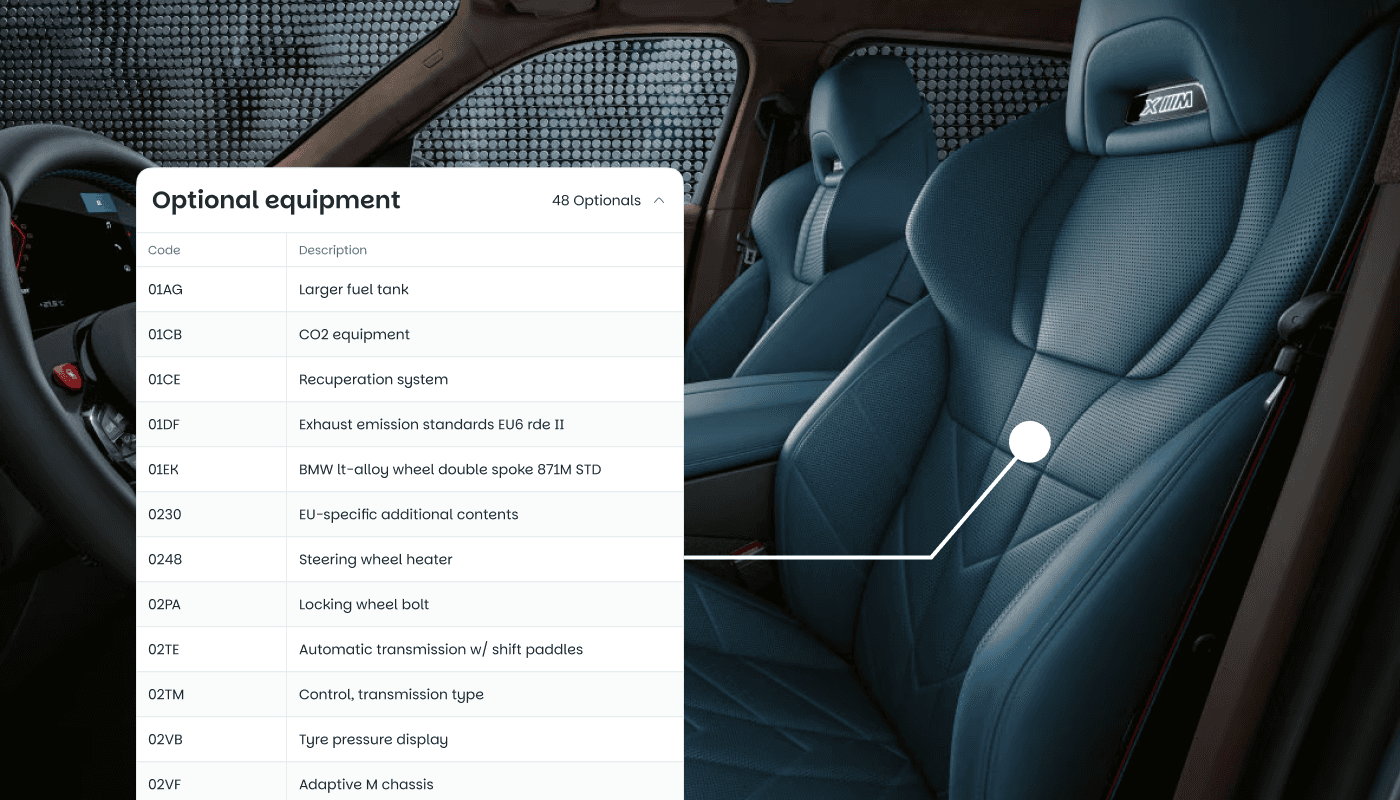
Compare the car with its factory option list. Anything on the car that is not on the list was added later.
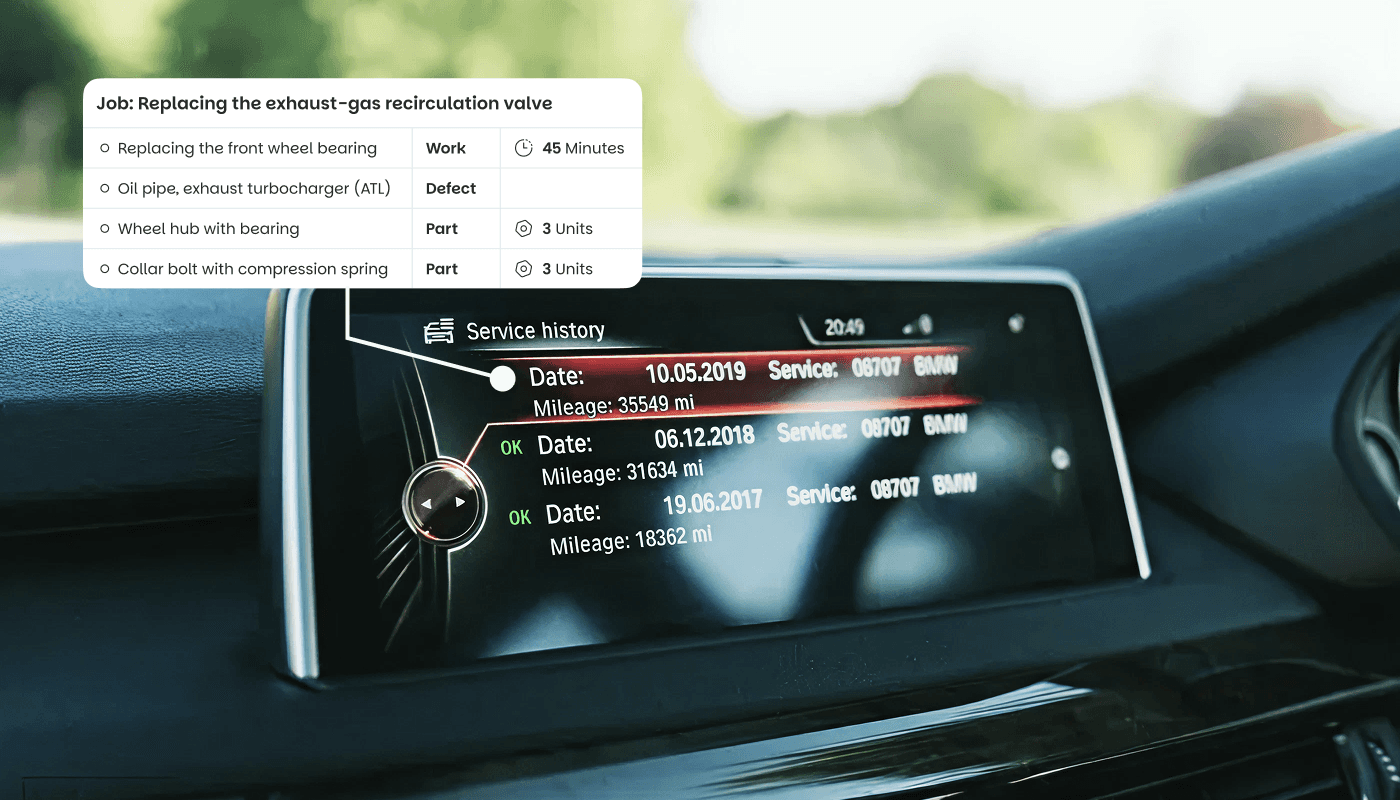
Read the retrofits and restrictions section of the history report.
Look for aftermarket wiring behind trim, in the boot and around the lights.
Run a diagnostic scan. Unofficial coding often leaves fault codes behind.
Ask for invoices. A good retrofit usually comes with paperwork.
Do retrofits affect value, warranty or insurance?
They can. Most buyers value factory equipment above retrofits, as explained in why identical BMWs sell for different prices. Risky changes can also affect warranty eligibility, fail a roadworthiness inspection or need declaring to your insurer. Some restrictions recorded against a car can affect its value in the same way.