Updated
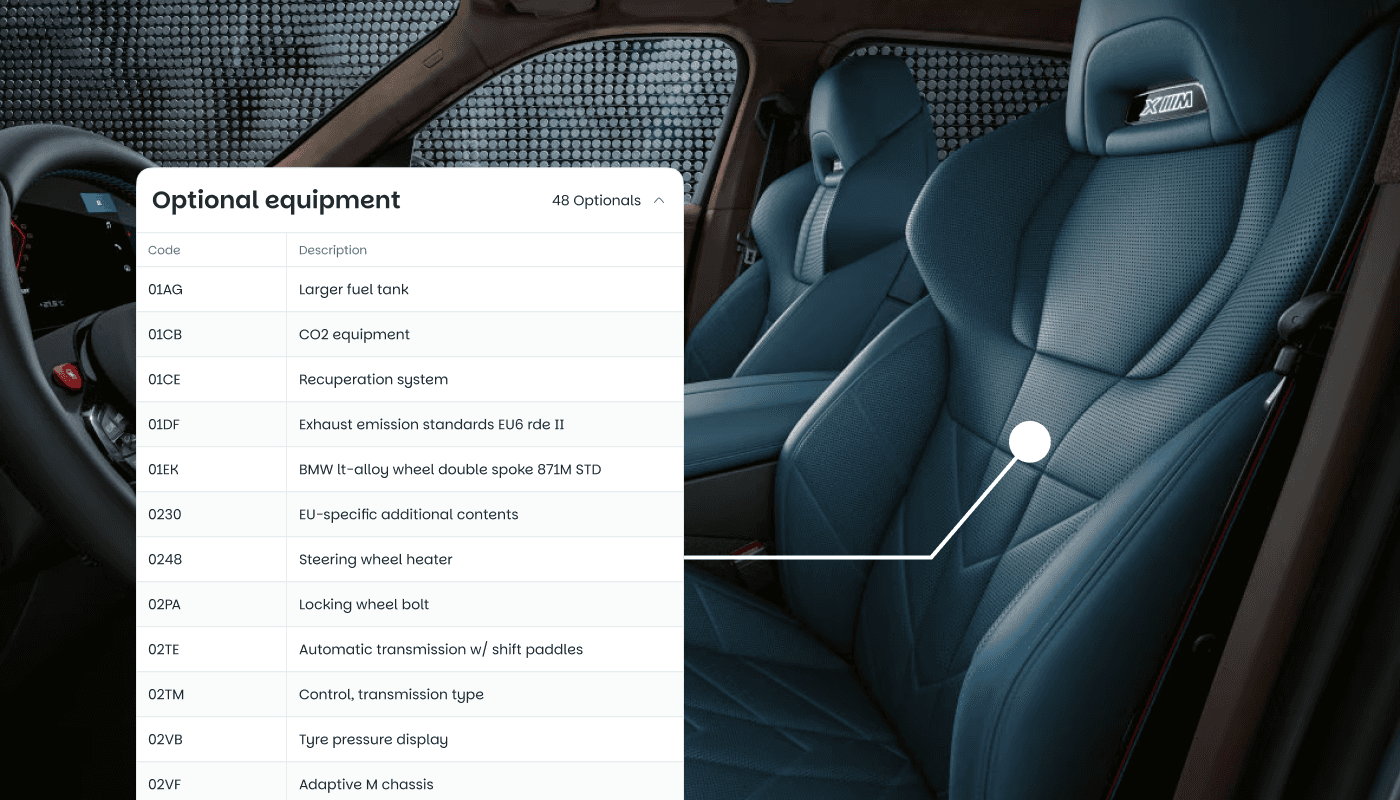
Two BMWs with the same model, engine, year and mileage can be worth very different amounts because of their factory options. Packages like M Sport, driver assistance, a head-up display or comfort seats shape demand on the used market. The only reliable way to know what a car really has is its factory option list, read from the VIN.
2
min read
By the
Which options tend to hold value on a used BMW?
Option | Why buyers pay more |
|---|---|
M Sport package | The most searched trim. Sharper looks and suspension. |
Driver assistance and parking packages | Expected on newer cars. Missing means a harder sale. |
Head-up display, premium audio, panoramic roof | Desirable extras that are hard to add later |
Heated or comfort seats | Strong demand in colder markets |
Adaptive suspension, M Sport brakes | Valued by enthusiasts |
The effect depends on the model and the market, but the rule holds: options that are expensive or impossible to add later hold their value best.
Why is the equipment in a listing often wrong?
Usually not out of malice. Sellers copy trim lists from similar cars, confuse packages or describe a later look as factory fit. Common examples are M Sport style bumpers added to a standard car and features activated by coding after delivery. Either way, you end up paying for equipment the car never had from the factory.

How do I verify a BMW's factory options?
Get the VIN from the seller.
Pull the factory option list. It shows every original option the car was built with.
Go through the listing line by line and mark anything that is not on the factory list.
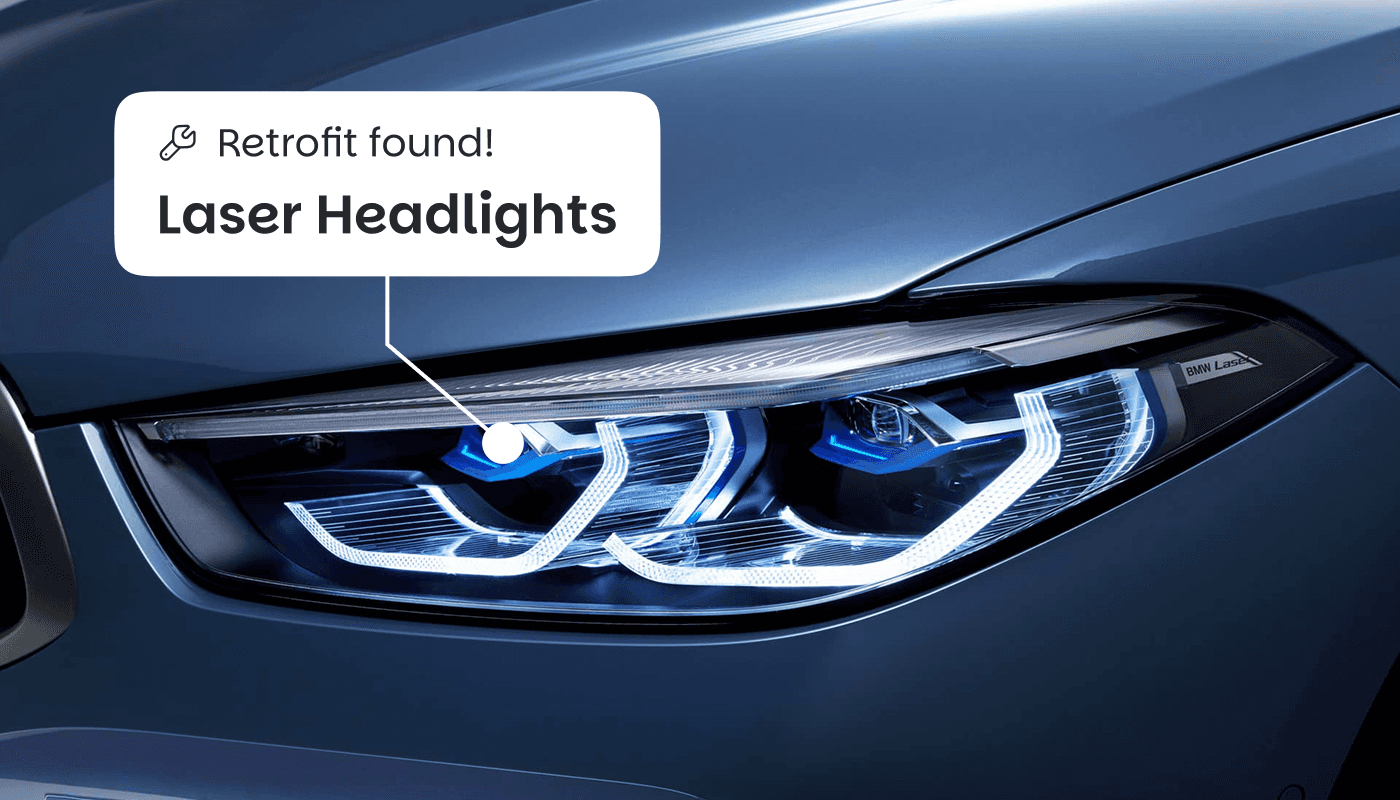
Check the retrofits section for changes made after the car left the factory.
Ask the seller about every difference before you talk about price.
Is a retrofit worth as much as a factory option?
Rarely. A well-done retrofit with original parts adds some value, but most buyers pay more for equipment the car was built with. A poor retrofit can even lower the price. More in BMW retrofits: which are normal and which are risky.