Updated
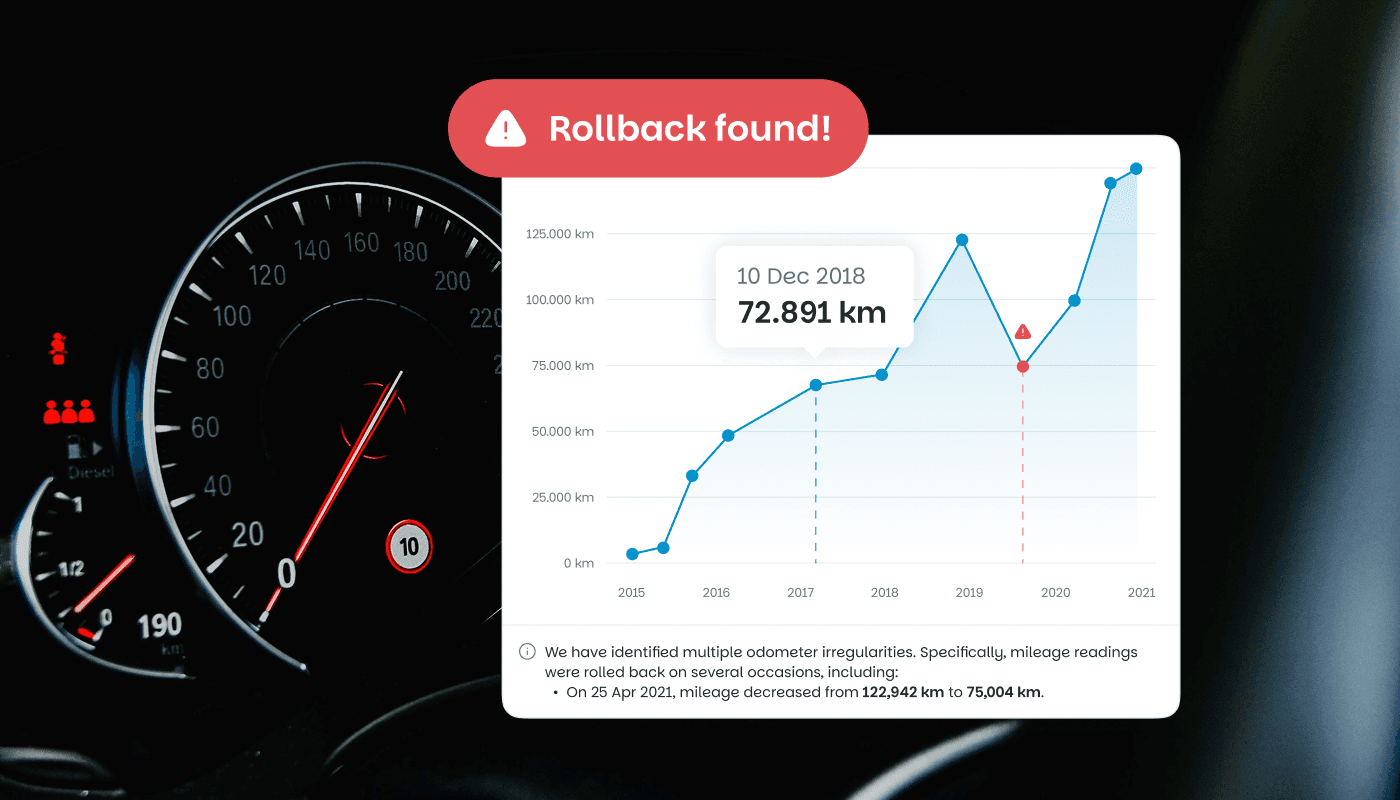
The most reliable way to spot an odometer rollback on a BMW is to compare the dashboard reading with the mileage recorded at every past workshop visit. A genuine odometer only rises, so any later reading that is lower than an earlier one is a red flag. Back it up with a wear check and a diagnostic scan at the viewing.
3
min read
By the
Why is a rollback harder to hide on a BMW than sellers think?
Because the dashboard is only one place the mileage lives. Every workshop visit logs the reading at that moment, and those entries stay on record no matter what happens to the instrument cluster later. Modern BMW, MINI and Rolls-Royce models also keep electronic copies of the mileage in other control units and in the car keys.
Winding back the cluster changes one number. It does not change what workshops recorded two, five or eight years ago.
What are the warning signs of a rolled-back BMW?
Sign | What it can mean |
|---|---|
A service reading lower than an earlier one | Rollback. The strongest single signal. |
Mileage barely rising for years on a daily car | Readings frozen or wound back between visits |
A long silent gap right before the sale | Recent readings kept out of the record |
Worn steering wheel, pedals or seat bolster at low mileage | Wear does not match the number |
Key or module mileage differs from the dashboard | The cluster was altered |
Can a single wrong reading just be a typo?
Yes. A technician can mistype a reading, and the next visit quietly corrects it. What matters is the pattern. A typo is one odd point that the line immediately recovers from. A rollback drops and stays lower, then carries on climbing from the new, smaller number.
The CheckVIN mileage check treats a lone corrected typo as a data entry error, so it does not cost the car points. A genuine rollback is flagged in red every time.

How do I check a BMW's mileage step by step?
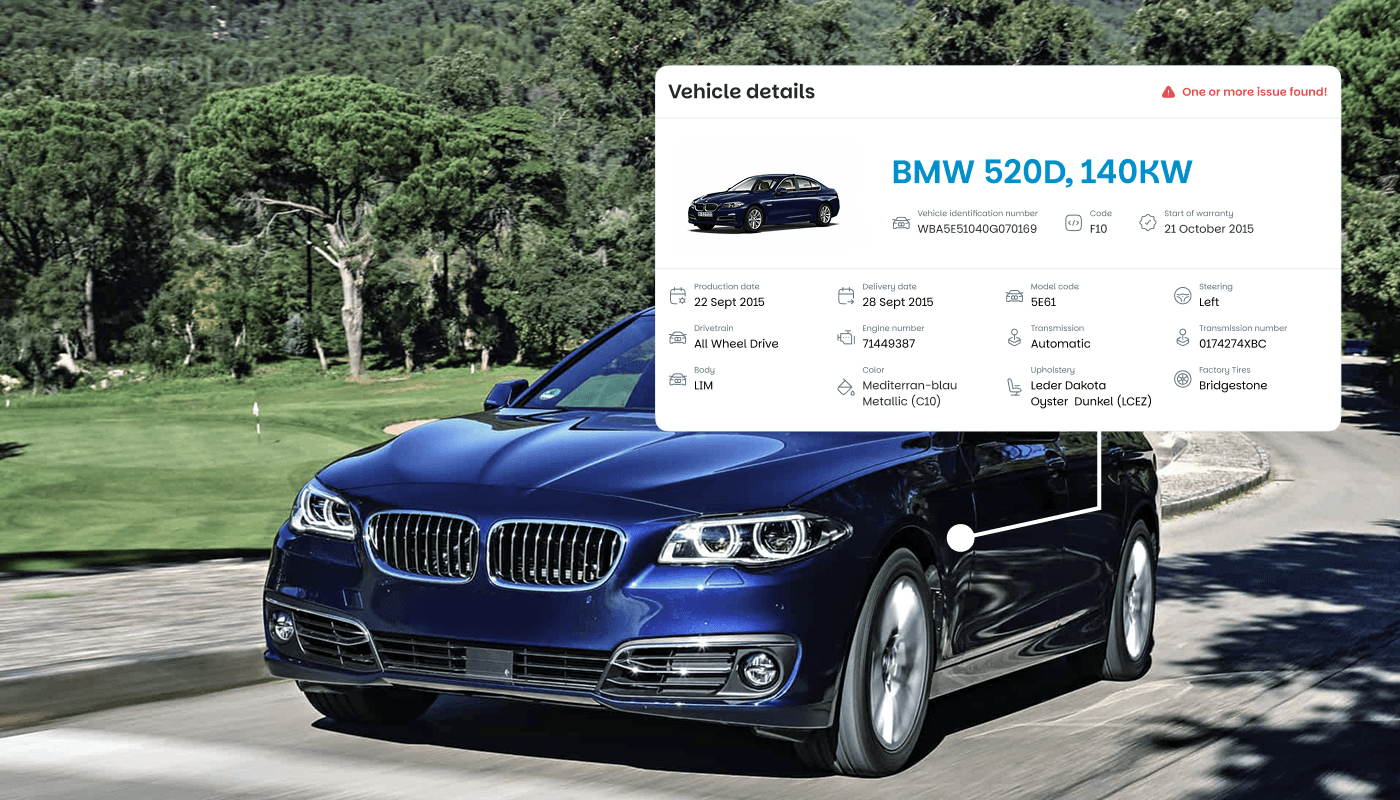
Get the VIN from the listing or ask the seller for it. Here is where to find the VIN on a BMW.
Pull the recorded mileage history and look at the line. It should rise steadily from visit to visit.
Compare the last recorded reading with the dashboard. Does the difference make sense for the time that has passed since?
Check the wear on the steering wheel, gear knob, pedals and driver's seat against the claimed mileage.
At the viewing, have a workshop read the mileage stored in the key and control units with a diagnostic tool, and compare it with the cluster.
What does a rolled-back BMW actually cost you?
More than the price difference. A car with hidden kilometres has more real wear on the engine, gearbox, suspension and brakes than you are paying for, and its service intervals are calculated from the wrong starting point. Problems that would be expected at the true mileage then arrive "early", and they arrive on your bill.
A few minutes with the mileage record before you travel to see the car is the cheapest insurance against that.